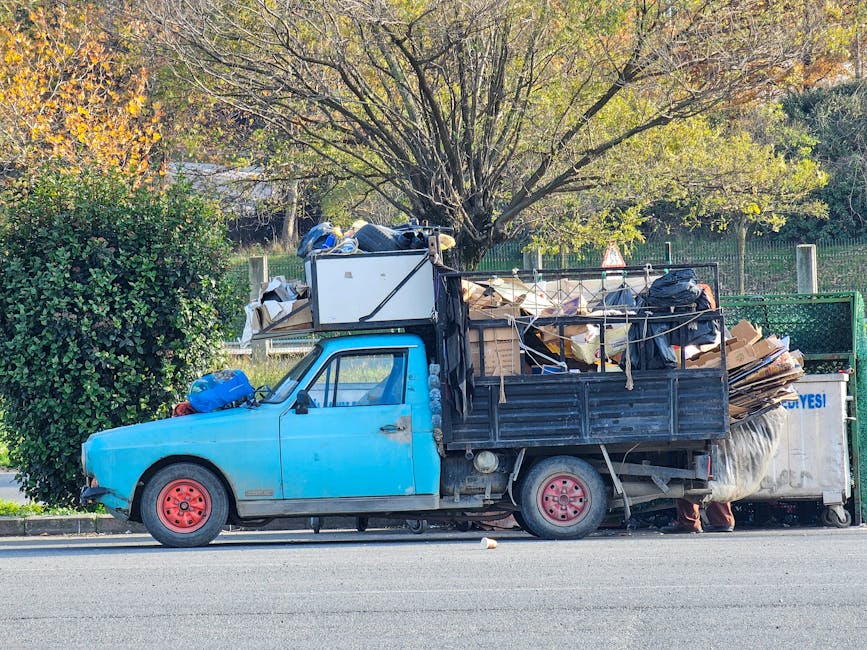
Archway Road bulky rubbish collection for shops Highgate: a practical guide for busy shop owners
If you run a shop on or near Archway Road, you already know how quickly bulky rubbish can build up. Broken display units, damaged stock, packaging, old shelving, worn-out furniture, and end-of-line items do not wait for a quiet day. They pile up in the back room, under counters, or near the shutter, and suddenly the whole place feels tighter, messier, and harder to work in. That is where Archway Road bulky rubbish collection for shops Highgate comes in: a sensible, local way to clear large waste without turning your trading day upside down.
This guide explains how shop bulky rubbish collection works, when it makes sense, what to watch for, and how to avoid the usual headaches. We will also look at compliance, practical planning, and the difference between one-off clearance, skip hire, and other options. If you have ever stood in a stockroom at 7:30am wondering where on earth all that broken cardboard and old retail clutter came from, you are in the right place.
Why Archway Road bulky rubbish collection for shops Highgate Matters
Retail spaces live and die by presentation. A tidy shop feels calm, professional, and easy to browse. A cluttered one feels rushed, cramped, and a bit neglected. Bulky waste is not just an eyesore. It can block fire exits, slow down stock movement, create trip hazards, and make deliveries awkward. In a busy Highgate shop, those problems snowball fast.
Archway Road brings its own reality too. Traffic, loading pressure, time-limited parking, narrow access points in some stretches, and the usual London stop-start rhythm all make large waste more difficult to move than people expect. If you are trying to remove shop fittings or a stack of old shelving from a trading premises, doing it ad hoc with a car or small van often becomes a false economy. You lose time, staff energy, and sometimes a whole half-day of trade. Not ideal, to be fair.
Bulky rubbish collection matters because it helps you keep the shop functional. That means less visual clutter, cleaner customer flow, and fewer interruptions when you need the space for deliveries, merchandising, or a quick refit. It also helps with duty of care. Commercial waste must be handled properly, and nobody wants a rushed disposal job turning into a compliance issue later on.
Expert summary: For shops on Archway Road, bulky rubbish collection is usually less about "getting rid of stuff" and more about protecting trading time, keeping the premises safe, and avoiding costly disruption.
There is also a reputational angle. Customers may never comment directly, but they notice whether a shop feels organised. A clear back-of-house area says a lot. So does a clean frontage, especially if waste is being managed discreetly rather than left to gather outside by the kerb.
How Archway Road bulky rubbish collection for shops Highgate Works
In practical terms, bulky rubbish collection for shops usually means the removal of large or awkward items that are too heavy, too big, or too inconvenient for normal bins. Depending on the provider and the waste type, the service may include loading, lifting, transport, sorting, and disposal or recycling.
The process is often straightforward, but the detail matters.
Typical collection process
- Assessment: You describe what needs removing. Photos help a lot, especially for shelving, fixtures, broken furniture, appliances, or mixed retail waste.
- Quote or booking: You receive a price based on volume, weight, labour, access, and waste type. Commercial waste is rarely one-size-fits-all.
- Scheduling: A collection window is agreed. For shops, early morning or after-hours often works best, though that depends on access and trading pattern.
- On-site loading: The crew removes items from the store, storeroom, yard, or rear access point. Good coordination here saves time.
- Sorting and disposal: Reusable and recyclable materials may be separated from general waste where appropriate.
- Completion and paperwork: For business waste, you should expect proper documentation or a record of transfer. Keep that on file.
There are a few practical variations. Some jobs are handled as a full clearance, where the team does the lifting and loading. Others may suit a skip, a man-and-van-style removal, or wait and load skip hire if you need a fast turnaround and do not want a skip sitting outside the premises. Each option has its place.
For a shop on Archway Road, access is often the deciding factor. If parking is tight or you cannot safely leave a container on the road, a collection method that avoids long roadside placement can be the calmer option. Simple, really. Sometimes the least glamorous choice is the smartest one.
Key Benefits and Practical Advantages
There are several clear reasons shop owners choose bulky rubbish collection instead of letting waste build up or trying to deal with it piecemeal.
- Less disruption to trading: A focused collection can be done quickly, often outside peak hours.
- Cleaner customer experience: No one wants to walk past broken stock cages or stale packaging on the way in.
- Improved back-of-house safety: Clear floors mean fewer trips, knocks, and awkward lifting incidents.
- Better use of storage space: Space reclaimed from waste can be used for stock, equipment, or preparation.
- More efficient refurbishment work: If you are remerchandising or refitting, removal of bulky items keeps the project moving.
- Potentially better recycling outcomes: Sorted material can often be diverted more effectively than mixed rubbish dumped in a rush.
Another benefit, and this is often underestimated, is morale. Staff work better in a space that feels in control. A stockroom full of broken chairs and collapsed cardboard tends to drain everyone a bit. Not a disaster, obviously, but it quietly drags on the day.
Bulky collection can also help with seasonal pressure. Think post-Christmas packaging, summer display changes, back-to-school stock reshuffles, or end-of-lease clean-outs. Those are the moments when waste volume suddenly jumps, and ordinary bins just shrug their shoulders and give up.
Who This Is For and When It Makes Sense
This service is useful for a wide range of retail businesses on or around Archway Road and the wider Highgate area. It is not limited to large shops either. Smaller independent businesses often benefit most because they have less storage and fewer spare hands.
Common shop types that use bulky rubbish collection
- Clothes boutiques and fashion retailers
- Convenience shops and small grocers
- Gift shops, bookshops, and homeware stores
- Hair and beauty retailers with bulky packaging or old fixtures
- Pharmacies and health retailers
- Newsagents and mixed retail units
- Cafes with retail display areas or storage rooms
It makes sense when you are dealing with any of the following:
- Old shelving, display stands, cabinets, or counters
- Damaged stock that cannot be resold
- Large cardboard or packaging piles after deliveries
- Broken appliances, fridges, or back-office equipment
- Shopfit waste after a renovation
- End-of-lease clearances
- Seasonal stock rationalisation
If you are unsure whether a load counts as bulky rubbish, ask a practical question: Would this fit neatly in normal bins without creating a mess or a manual-handling issue? If the answer is no, it probably needs a more structured removal plan.
Shops with narrow access or limited frontage should think carefully before booking the wrong disposal method. A large skip may be fine in some cases, but if you need permissions or the roadside space is awkward, the smoother option may be commercial rubbish removal or a targeted collection service.
Step-by-Step Guidance
If you want the process to go smoothly, a little planning makes a big difference. Here is a simple way to approach it without overcomplicating things.
1. Identify exactly what needs to go
Walk through the shop and list the items. Separate waste into rough groups: furniture, fixtures, packaging, electricals, stock, and anything you suspect may need special handling. Do not guess if something is unusual. Better to ask first than to discover later that it required a separate route.
2. Measure the volume and check access
Bulky waste collection is often priced and planned by volume or labour required. Measure doorways, stairs, loading points, and any tight corners. If the collection team has to wrestle a broken cabinet through a narrow stockroom corridor, the job will take longer. Obvious, but worth saying.
3. Decide on timing
For shops, timing is everything. Early morning before opening, after closing, or during a quieter trading window may be best. If the road is busy, think about when access is easiest. One hour can make the difference between a neat collection and a mildly chaotic one.
4. Sort what can be recycled
Cardboard, metal, some plastics, and certain fixtures can often be separated. The cleaner the load, the better the recovery potential. It is not about becoming a recycling saint overnight; it is about making sensible choices where possible.
5. Prepare the area
Move customer-facing items away from the route, protect flooring if needed, and keep a clear path. Staff should know what is going and what is staying. A label or coloured tape system works well. You do not want a prized display item disappearing in the middle of a tidy-up because someone assumed it was rubbish.
6. Check documentation and completion
For business waste, keep a record of the transfer or collection. This is part of sound business practice, and it protects you if any question comes up later. Small shops often overlook this bit, then spend ten minutes rummaging through old emails. Been there, probably more than once.
One more thing: if you are clearing during a busy week, build in a buffer. Collections sometimes run more smoothly than expected, sometimes not. A ten-minute delay is normal. A locked back door and a missing key, less so.
Expert Tips for Better Results
Here are the small details that tend to make the biggest difference in real life.
- Send photos before booking: A few clear pictures reduce surprises and help with more accurate pricing.
- Keep waste streams separate: Cardboard, metal, wood, and electrical items are easier to manage when not mixed into one heap.
- Plan around deliveries: If your stock arrives in the morning, do not book waste removal at the same time unless you enjoy chaos.
- Use a side or rear entrance where possible: It keeps customer flow cleaner and is usually less disruptive.
- Protect delicate floors and display areas: A sheet of hardboard or floor protection can prevent avoidable scuffs.
- Check weight as well as size: Some items look manageable until two people try to lift them. Then the story changes.
Here is a small but valuable tip: keep a "clear-out corner" in your stockroom. Even a modest one. When waste needs to go, you can stage it there neatly instead of creating a trail through the shop. It sounds simple because it is simple, and that is usually the point.
Another useful habit is to schedule bulk collections around trading seasons. For many Highgate shops, the end of a seasonal changeover is the sweet spot. You clear old fixtures, make space for new stock, and the shop immediately feels lighter. It is a nice feeling, truth be told.
Common Mistakes to Avoid
Most bulky rubbish problems come from rushing, not from complexity. The mistakes are predictable, which is annoying, but also helpful because they are easy to avoid once you know them.
- Leaving it too late: A planned clearance is always easier than an emergency one.
- Underestimating access issues: Narrow pavements, steps, locked gates, and loading restrictions can derail an otherwise simple job.
- Mixing hazardous items with general waste: Batteries, chemicals, certain cleaning products, and some electrical components may need separate handling.
- Assuming everything can go in one load: Not always true, especially with commercial waste.
- Forgetting staff coordination: If no one knows what is being collected, confusion follows. Usually in a small but irritating way.
- Ignoring paperwork: Verbal arrangements are not enough for business waste management.
There is also the "we'll just pile it out back for now" trap. That works for about five minutes. Then it becomes a fire exit issue, a pest risk, or a problem when the landlord visits. Better to make a plan and finish the job properly.
One mistake that catches independent shop owners out is confusing bulky rubbish with ordinary refuse. A single broken display unit might be bulky waste, but a load of mixed packaging may be better handled another way. Getting the classification right can save time and money.
Tools, Resources and Recommendations
You do not need a complicated toolkit, but a few basics help a lot.
Useful tools for shop clearances
- Basic inventory list: Helps you decide what stays and what goes.
- Camera phone: Photos are useful for quotes, planning, and internal sign-off.
- Labels or tape: Handy for marking keep, remove, recycle, or destroy.
- Gloves and sturdy footwear: Especially important when moving items before the team arrives.
- Trolleys or sack trucks: If your team is moving items to a loading point.
- Floor protection: Good for older shop floors, polished tiles, or tight corridors.
As for service types, it helps to compare them before you commit. Some shops need a straightforward collection, others need a broader commercial waste solution. If the job is more about ongoing mixed business waste, commercial skip hire may make sense. If you are clearing heavier or awkward material, grab hire services can work well for larger accessible loads. For a quick, contained disposal solution, wait and load skip hire is worth considering.
If you want to understand what can and cannot go with a general load, the guide on what can go in a skip is a sensible place to start. And if you are comparing costs, the page on skip sizes and prices can help you think through the practical side without guessing.
Some shops also use man and van collections for lighter but still awkward loads, especially when access is tight. It is not the same as every other method, and that matters. Different waste, different approach.
Law, Compliance, Standards, or Best Practice
For shop owners, compliance does not need to be scary, but it does need to be taken seriously. Commercial waste is not the same as a household clear-out. The business that produces the waste remains responsible for making sure it is handed over to a suitable carrier and dealt with properly.
In plain English, that means you should:
- Use a reputable waste carrier for business waste
- Keep records of collections and transfers
- Separate hazardous or specialist items where required
- Avoid leaving waste where it creates obstruction, nuisance, or safety risk
- Follow site-specific health and safety practices during loading and lifting
There is also a practical standard to aim for: treat every clearance as if someone else may need to review it later. That mindset encourages cleaner records, safer handling, and better decisions. A lot of trouble is avoided simply by slowing down long enough to ask, "Is this the right waste route?"
Health and safety matters too. If staff are helping to move bulky items before collection, they should use sensible manual handling practices. Do not twist awkwardly with heavy furniture. Do not carry things that are obviously too heavy for one person. And if a piece of equipment contains glass, refrigerant, sharp edges, or electrical parts, it needs more care than "just get rid of it."
For higher-risk loads, the page on hazardous waste disposal is relevant if your items include substances or materials that need separate handling. If your clearance involves broken appliances or cooling units, fridge and appliance removal may be the more suitable route.
Best practice is not about overcomplicating the job. It is about doing the normal things properly, every time. Keep it neat. Keep it documented. Keep it safe.
Options, Methods, or Comparison Table
There is no single best answer for every shop. The right method depends on volume, access, urgency, and the type of waste you have. Here is a practical comparison to help you think it through.
| Option | Best for | Strengths | Trade-offs |
|---|---|---|---|
| Bulky rubbish collection | Shop fittings, mixed bulky items, one-off clearances | Quick, labour included, minimal shop disruption | May cost more than doing it yourself for very small loads |
| Commercial skip hire | Ongoing waste, larger renovation jobs, repeated loading | Good for larger volumes, flexible if you keep adding waste | Needs space and sometimes permits or careful placement |
| Wait and load | Tight roads, restricted frontage, fast clear-outs | No skip left on site, useful in busy streets | Timing must be tight; the load has to be ready |
| Man and van | Smaller awkward loads, lighter shop clutter | Flexible and often convenient for patchy jobs | May not suit heavy or high-volume waste |
| Grab hire | Heavy, accessible material and larger clearances | Fast for certain loads, efficient for bulk material | Needs suitable access and a suitable waste type |
If you are still deciding, think in terms of friction. Which method will least interrupt trading, staff movement, and customer access? That answer usually points you in the right direction. Not always, but often enough.
Case Study or Real-World Example
Picture a small independent shop near Archway Road preparing for a refit. The owner has old wall shelving, a damaged till unit, several collapsed display stands, and ten or twelve bags of packaging from a recent stock change. There is also a broken fridge in the back room and a handful of damaged items that cannot be resold.
At first, the instinct is to "deal with it later." But later means after opening hours, then after deliveries, then after staff have already spent time working around the clutter. The back room gets tighter. The access route gets awkward. The broken fridge sits there like an unwanted houseguest.
Instead, the owner arranges a bulk collection for an early morning slot. Staff separate cardboard, obvious recyclables, and the fridge in advance. They clear a path from the rear storage area to the loading point and label anything that must not be removed. The crew arrives, loads efficiently, and the shop is ready before the mid-morning customer rush.
The result is not dramatic, and that is the point. The shop simply feels better. The staff can move freely. The refit starts on time. There is no trail of waste hanging about for days. The owner later says the best part was not the removal itself but the quiet sense of relief when the room was finally clear. That is a very normal reaction, by the way.
This kind of example is common in retail. The waste is rarely the problem on its own. The problem is what the waste does to timing, space, and momentum.
Practical Checklist
Use this checklist before booking Archway Road bulky rubbish collection for shops Highgate. It keeps the job tidy and avoids last-minute surprises.
- List every item to be removed
- Separate bulky waste from normal bin waste
- Flag anything electrical, sharp, heavy, or hazardous
- Take clear photos for planning and quoting
- Measure access points, stairs, and narrow corridors
- Choose a collection time that suits trading hours
- Clear a safe loading path
- Protect floors or walls if needed
- Brief staff on what is staying and what is going
- Ask for collection records or paperwork
- Check whether a skip, grab hire, or wait-and-load method is more suitable
- Keep hazardous or specialist items separate
If you can tick most of those boxes, the collection is likely to run far more smoothly. If not, no drama. Just pause, sort it out, and then book. A little order now saves a lot of bother later.
Conclusion
Archway Road bulky rubbish collection for shops Highgate is really about making retail life easier. It keeps your space safer, your shop cleaner, and your team less burdened by waste that should have been dealt with sooner. Whether you are clearing old fixtures, packaging, damaged stock, or a full back-room build-up, the right approach depends on access, timing, waste type, and how much disruption you can tolerate.
For many local shops, the best results come from planning the collection properly, separating waste sensibly, and choosing the method that fits the premises rather than forcing the premises to fit the method. That sounds obvious, but in the real world people skip this bit and pay for it later.
Take the time to line up the right solution, keep the paperwork in order, and make the job as straightforward as possible. Your shop will feel better for it. Customers will notice, even if they never say so. And your staff will thank you in that quiet, practical way people do when a back room finally stops feeling like a storage headache.
If you are ready to clear space and move on with the day, now is a very good time to make it happen.
Get a free quote today and see how much you can save.
Frequently Asked Questions
What counts as bulky rubbish for a shop?
Bulky rubbish usually includes large or awkward items such as shelving, counters, broken furniture, display units, appliances, and oversized packaging. If it is too large, heavy, or awkward for normal bins, it probably counts.
Is bulky rubbish collection better than hiring a skip for a shop?
It depends on access, volume, and urgency. Bulky rubbish collection is often better for one-off clear-outs and tight access on Archway Road, while skip hire can suit larger ongoing jobs where space is available.
Can a shop leave bulky waste outside ready for collection?
Only if it is safe, allowed, and properly arranged. Waste should not block pavements, exits, or loading areas. For commercial premises, it is usually better to plan a controlled loading window rather than leave items out casually.
Do I need paperwork for shop waste removal?
Yes, you should keep records of commercial waste collections. Good paperwork protects your business and shows that the waste was transferred responsibly.
How quickly can bulky rubbish be collected from a Highgate shop?
That depends on availability, access, and the size of the load. Some collections can be arranged quickly, especially if the job is well described and the access is straightforward. Photos usually help speed things up.
Can electrical items be taken with bulky rubbish?
Sometimes, but not always in the same way as ordinary waste. Electrical items may need separate handling, especially if they contain refrigerants, batteries, or specialist components. Always check before including them.
What should I do with broken shop furniture?
Broken counters, shelving, desks, and display units can often be collected as bulky waste if they are not hazardous. If the items are mixed with other materials, or if they need dismantling first, mention that when booking.
Is same-day bulky rubbish collection possible?
Sometimes, yes. It depends on workload, timing, and access. If you are in a hurry, ask early and be clear about the volume and type of waste. Late calls can still work, but they are less predictable.
What is the cheapest way to remove bulky waste from a shop?
The cheapest option is not always the best option. For small loads, a targeted collection can be more efficient than a skip. For larger loads, a skip or grab hire may be more economical. The right choice depends on the job, not just the price tag.
Can recycling be included in bulky rubbish collection?
Often, yes. Many bulky waste jobs include sorting recyclable materials such as cardboard, metal, and some plastics. The more cleanly you separate waste before collection, the better the recycling outcome is likely to be.
What if my shop has very tight access on Archway Road?
Then access needs to be part of the decision from the start. In tight spaces, services such as wait and load or man and van collection may be more practical than placing a skip on site. Good planning prevents a lot of frustration.
How do I know if a waste company is suitable for business waste?
Look for a provider that understands commercial clearances, gives clear instructions, and provides proper records. If they sound vague about paperwork, access, or waste type, that is a bit of a warning sign.
One final thought: when bulky waste is handled well, it disappears into the background and stops taking up mental space too. And honestly, that is often the real win.